
Last Updated on June 5, 2026 by Afsar
A kayak can last for years when it is stored and maintained properly. Many common problems do not come from hard paddling. They come from leaving a kayak in direct sun, dragging it across rough ground, storing it with pressure on the hull, or putting it away while it is still dirty and wet.
This guide explains how to care for a kayak between trips, how to store it safely, and what to check before the next time you paddle. It is useful for recreational kayaks, sit-on-top kayaks, fishing kayaks, inflatable kayaks, and touring kayaks.
Rinse your kayak after each trip
After kayaking, rinse the hull, deck, seat area, foot braces, handles, and storage areas with clean water. This is especially important after paddling in saltwater, muddy rivers, sandy launches, or water with heavy plant debris. Dirt and grit can work into small parts and make them harder to use over time.
You do not need a complicated cleaning routine after every short paddle. A simple rinse and wipe-down is enough for most casual trips. The main goal is to remove anything that could stain, smell, scratch, or slowly damage parts of the kayak.
Let the kayak dry before storing it
Putting a kayak away while it is still wet can lead to musty smells, mildew, and damp gear compartments. After rinsing, open hatches, drain plugs, seat areas, and storage spaces so moisture can escape. Tilt the kayak slightly so water can run out instead of sitting inside the boat.
If you use a sit-inside kayak, check the cockpit and bulkhead areas carefully. If you use a sit-on-top kayak, make sure scupper holes and storage wells are clear. Inflatable kayaks should be dried before folding so trapped moisture does not sit inside creases.

Quick kayak cleaning checklist
- Rinse the outside of the hull
- Rinse the seat, cockpit, or deck area
- Clear sand and grit from foot braces
- Open hatches so moisture can escape
- Remove wet gear from storage areas
- Check drain plugs and scupper holes
- Wipe dirt from handles and deck lines
- Let the kayak dry before covering it
Avoid storing a kayak in direct sun
Long sun exposure can fade colors, weaken materials, and age plastic, rubber, straps, and deck fittings faster. A kayak can handle sun during normal paddling, but leaving it outside uncovered for weeks or months is different. Shade is one of the easiest ways to protect the boat.
If outdoor storage is your only option, use a breathable cover and keep the kayak off the ground. Avoid wrapping it tightly in plastic because trapped heat and moisture can create new problems. The best setup protects the kayak from sun while still allowing airflow.
Store the kayak with even support
Kayaks should not be stored with pressure on one small point for a long time. Poor storage can create dents, flat spots, or hull distortion. Instead, support the kayak across wider areas using padded bars, wall racks, straps, or a stable storage system made for kayaks.
Do not hang a kayak by its grab handles for long-term storage. Handles are useful for carrying, but they are not designed to hold the full weight of the kayak for months. It is better to support the hull or suspend the kayak with wide straps.

Check small parts before they become problems
Small kayak parts are easy to ignore until something fails at the launch. Before each season, check handles, bungees, deck lines, hatch covers, seat straps, rudder cables, skeg controls, foot braces, and drain plugs. Replace cracked, loose, or worn parts before they ruin a trip.
Fishing kayaks may need extra attention because rod holders, gear tracks, mounts, crates, and electronics can loosen over time. Touring kayaks may need checks around bulkheads, hatch seals, deck rigging, and rudder or skeg systems.
Pre-season kayak inspection
- Look for cracks, deep scratches, or soft spots
- Check handles and carry points
- Inspect seat straps and back support
- Test foot braces or pedals
- Check hatch covers and seals
- Look over bungees and deck lines
- Confirm drain plugs are not missing
- Test rudder or skeg movement if the kayak has one
- Check that accessories are tight and secure
Protect the hull when moving the kayak
Dragging a kayak across gravel, pavement, rocks, or rough concrete can wear down the hull faster than normal paddling. Short drags on soft grass or sand may not matter much, but repeated dragging on hard surfaces can leave deep scratches and thin spots.
Use two people to carry heavier kayaks when possible, or use a kayak cart for longer walks from the parking area to the water. A simple cart can protect the hull and make loading easier, especially for fishing kayaks and wider recreational kayaks.
Store paddles and gear properly too
Kayak care is not only about the boat. Paddles, life jackets, dry bags, spray skirts, carts, straps, and safety gear also last longer when they are cleaned and dried. Do not leave wet gear packed inside the kayak for days. Remove it, dry it, and store it somewhere with airflow.
Life jackets should be dried fully before storage and kept away from sharp objects, heavy weight, and direct heat. Paddles should be rinsed after sandy or salty trips, especially around ferrules and adjustable parts.

How to store a kayak indoors
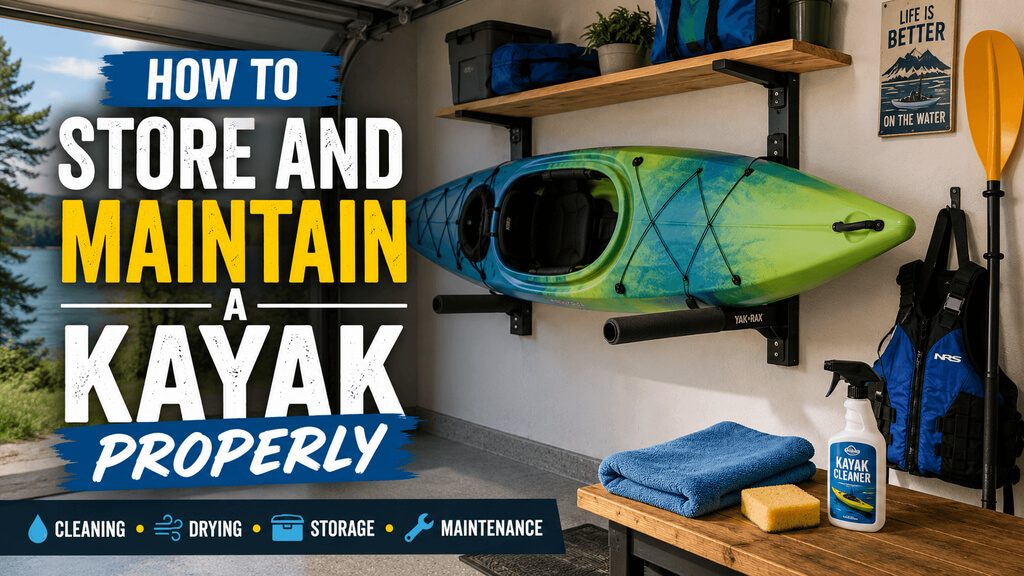
Indoor storage is usually the best option if you have space. A garage, shed, basement, or covered storage area protects the kayak from sun, storms, falling branches, and constant temperature swings. Wall racks, ceiling hoists, padded stands, or wide straps can all work well.
Make sure the kayak is not blocking walkways or leaning where it can fall. If you store it on its side, support it carefully and avoid sharp pressure points. If you hang it, use wide straps rather than thin rope.
How to store a kayak outdoors
Outdoor kayak storage can work if you protect the boat from sun, moisture buildup, and ground contact. Keep it raised on a rack, shaded when possible, and covered with a breathable cover. Angle the kayak so rainwater does not pool inside the cockpit or storage areas.
Security matters too. If the kayak is outside, use a cable lock or secure storage area. Kayaks are awkward to carry, but they can still be stolen from yards, docks, racks, and driveways.
Best kayak storage habits
- Keep the kayak out of long direct sun
- Support the hull evenly
- Use padded racks or wide straps
- Keep the kayak off the ground
- Let air move around the boat
- Avoid trapping moisture under tight plastic
- Do not hang the kayak by the carry handles
- Keep heavy items off the hull
- Lock the kayak if stored outside
Inflatable kayak care is a little different
Inflatable kayaks should be rinsed, dried, and checked before they are folded. Sand, grit, and small debris can rub against the material when packed. Let the kayak dry fully, then fold it without forcing sharp creases. Store it away from extreme heat, sharp tools, and heavy items.
Before the next trip, inflate it at home if possible and listen for leaks. Check valves, seams, floor chambers, fins, and carry handles. Finding a slow leak at home is much better than discovering it at the launch.
When to repair or replace parts
Small wear marks are normal, but deep cracks, loose fittings, broken handles, missing plugs, damaged hatch covers, and failing seat straps should be fixed before paddling again. Do not wait until a small issue becomes a bigger problem on the water.
Some repairs are simple, such as replacing bungee cord, tightening hardware, or adding a new drain plug. Larger hull damage may need the right repair kit or help from a kayak shop, especially if the boat takes on water or the damaged area is near a seam or scupper.
Use kayak guides for better planning
Good storage and maintenance make it easier to enjoy the next paddle, but choosing the right water still matters. You can compare more paddling ideas through the Kayakbase locations guide.
If your paddling plans include rocky rivers, faster water, or rougher conditions where head protection matters, read the guide to whitewater kayaking helmets.
Simple rule for kayak care
Clean it, dry it, support it, and keep it out of harsh sun when possible. Kayak maintenance does not have to be complicated. A few good habits after each trip can prevent damage, reduce odors, protect small parts, and help your kayak stay ready for the next day on the water.

Afsar is an avid kayak blogger born near the coast. He has a passion for kayaking and started as a child. He has paddled in various conditions and locations and promotes responsible kayaking. Afsar’s blog is widely read, and they are a respected voice in the kayaking community, offering valuable content on kayaking trips, gear, tips, and tricks. Afsar collaborates with other bloggers and brands and continues to inspire others through their writing and social media.